LMS vs LXP: Which Learning Platform is Better in 2026?
Introduction
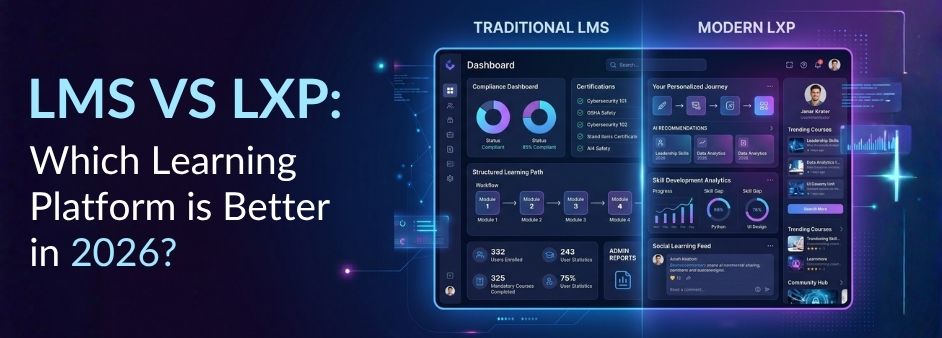
As organizations continue to invest in employee development, choosing the right learning platform has become more important than ever. Two terms that frequently appear in corporate learning discussions are Learning Management Systems (LMS) and Learning Experience Platforms (LXP).
While both platforms support employee learning, they serve different purposes and deliver different experiences. Understanding these differences is essential for organizations looking to build a future-ready workforce in 2026.
So, which platform is better, LMS or LXP? The answer depends on your learning objectives, organizational culture, and employee needs.
What is an LMS?
A Learning Management System (LMS) is a platform designed to create, manage, deliver, and track training programs. Traditionally, LMS platforms have been the backbone of corporate learning, helping organizations administer mandatory training, compliance courses, onboarding programs, and certifications.
An LMS provides a structured learning environment where administrators can assign courses, monitor progress, and generate reports.
Common LMS Capabilities:
- Course management and delivery
- Employee onboarding programs
- Compliance and certification tracking
- Learning progress reports
- Assessment and testing tools
Organizations that require standardized training and centralized administration often rely on LMS platforms.
What is an LXP?
A Learning Experience Platform (LXP) focuses on the learner rather than the administrator. Unlike traditional LMS platforms, LXPs provide personalized learning experiences by recommending content based on employee interests, career goals, skills, and learning behavior.
LXPs encourage self-directed learning and make learning feel more like consumer platforms employees use every day.
Common LXP Capabilities:
- Personalized content recommendations
- AI-driven learning paths
- Social and collaborative learning
- Content aggregation from multiple sources
- User-generated content and knowledge sharing
LXPs are designed to create engaging and continuous learning experiences rather than simply managing training programs.
LMS vs LXP: Key Differences
| Feature | LMS | LXP |
|---|---|---|
| Primary Focus | Administration & Compliance | Learner Experience |
| Learning Style | Structured & Assigned | Personalized & Self-Directed |
| Content Delivery | Organization-Controlled | AI-Driven Recommendations |
| User Experience | Traditional | Consumer-Like Experience |
| Social Learning | Limited | Extensive |
| Analytics | Completion & Compliance Tracking | Engagement & Skill Development |
| Best For | Compliance, Onboarding, Certifications | Continuous Learning, Upskilling, Reskilling |
When Should Organizations Choose an LMS?
An LMS remains the preferred choice when organizations need a high level of control over learning programs.
It is particularly useful for:
- Regulatory and compliance training
- Employee onboarding
- Certification management
- Standardized learning across departments
- Tracking mandatory course completion
For industries such as healthcare, finance, manufacturing, and government, an LMS often remains a critical component of learning infrastructure.
When Should Organizations Choose an LXP?
An LXP is ideal when the goal is to create a culture of continuous learning and employee-driven development.
Organizations may benefit from an LXP when they want to:
- Promote self-directed learning
- Encourage skill development
- Improve learner engagement
- Support career growth initiatives
- Deliver personalized learning experiences
Companies focused on innovation and workforce agility often find LXPs particularly valuable.
The Rise of AI in Learning Platforms
One of the biggest trends in 2026 is the integration of Artificial Intelligence into learning platforms. Modern LXPs use AI to recommend relevant content, identify skill gaps, and personalize learning journeys.
Even traditional LMS providers are beginning to incorporate AI-powered features to improve engagement and learning outcomes.
As a result, the distinction between LMS and LXP is gradually becoming less rigid, with many platforms combining features from both categories.
LMS and LXP: Do You Really Need to Choose?
Many organizations assume they must choose one platform over the other. In reality, the most effective learning strategies often combine both.
A hybrid approach allows organizations to:
- Use an LMS for compliance and structured learning
- Use an LXP for personalized development
- Improve employee engagement
- Maintain learning governance
- Support continuous skill growth
Rather than replacing LMS platforms, LXPs often complement them.
Which Platform is Better in 2026?
There is no universal winner.
If your primary goal is managing training programs, tracking compliance, and ensuring completion, an LMS remains the better choice.
If your focus is employee engagement, continuous learning, and skill development, an LXP offers greater flexibility and personalization.
For many organizations, the ideal solution is a combination of both, leveraging the strengths of each platform to create a comprehensive learning ecosystem.
Conclusion
The future of corporate learning is not about choosing between LMS and LXP—it is about creating learning experiences that align with business goals and employee expectations.
As workforce development becomes increasingly important, organizations that invest in the right learning technology will be better positioned to attract, develop, and retain top talent.
Whether you choose an LMS, an LXP, or a hybrid model, the ultimate objective remains the same: empowering employees to learn, grow, and succeed.
FAQs
What is the difference between an LMS and an LXP?
An LMS focuses on managing and tracking training programs, while an LXP focuses on creating personalized and engaging learning experiences.
Is an LXP replacing LMS platforms?
No. LXPs are typically used alongside LMS platforms to enhance learner engagement and personalized development.
Which platform is better for compliance training?
An LMS is generally the better choice for compliance training because it provides structured learning paths and detailed tracking capabilities.
Can organizations use both an LMS and an LXP?
Yes. Many organizations use a hybrid approach, combining LMS functionality for administration and compliance with LXP capabilities for personalized learning.
How does AI improve learning platforms?
AI helps recommend relevant content, identify skill gaps, personalize learning journeys, and improve employee engagement.
Introduction
As organizations continue to invest in employee development, choosing the right learning platform has become more important than ever. Two terms that frequently appear in corporate learning discussions are Learning Management Systems (LMS) and Learning Experience Platforms (LXP).
While both platforms support employee learning, they serve different purposes and deliver different experiences. Understanding these differences is essential for organizations looking to build a future-ready workforce in 2026.
So, which platform is better, LMS or LXP? The answer depends on your learning objectives, organizational culture, and employee needs.
What is an LMS?
A Learning Management System (LMS) is a platform designed to create, manage, deliver, and track training programs. Traditionally, LMS platforms have been the backbone of corporate learning, helping organizations administer mandatory training, compliance courses, onboarding programs, and certifications.
An LMS provides a structured learning environment where administrators can assign courses, monitor progress, and generate reports.
Common LMS Capabilities:
- Course management and delivery
- Employee onboarding programs
- Compliance and certification tracking
- Learning progress reports
- Assessment and testing tools
Organizations that require standardized training and centralized administration often rely on LMS platforms.
What is an LXP?
A Learning Experience Platform (LXP) focuses on the learner rather than the administrator. Unlike traditional LMS platforms, LXPs provide personalized learning experiences by recommending content based on employee interests, career goals, skills, and learning behavior.
LXPs encourage self-directed learning and make learning feel more like consumer platforms employees use every day.
Common LXP Capabilities:
- Personalized content recommendations
- AI-driven learning paths
- Social and collaborative learning
- Content aggregation from multiple sources
- User-generated content and knowledge sharing
LXPs are designed to create engaging and continuous learning experiences rather than simply managing training programs.
LMS vs LXP: Key Differences
| Feature | LMS | LXP |
|---|---|---|
| Primary Focus | Administration & Compliance | Learner Experience |
| Learning Style | Structured & Assigned | Personalized & Self-Directed |
| Content Delivery | Organization-Controlled | AI-Driven Recommendations |
| User Experience | Traditional | Consumer-Like Experience |
| Social Learning | Limited | Extensive |
| Analytics | Completion & Compliance Tracking | Engagement & Skill Development |
| Best For | Compliance, Onboarding, Certifications | Continuous Learning, Upskilling, Reskilling |
When Should Organizations Choose an LMS?
An LMS remains the preferred choice when organizations need a high level of control over learning programs.
It is particularly useful for:
- Regulatory and compliance training
- Employee onboarding
- Certification management
- Standardized learning across departments
- Tracking mandatory course completion
For industries such as healthcare, finance, manufacturing, and government, an LMS often remains a critical component of learning infrastructure.
When Should Organizations Choose an LXP?
An LXP is ideal when the goal is to create a culture of continuous learning and employee-driven development.
Organizations may benefit from an LXP when they want to:
- Promote self-directed learning
- Encourage skill development
- Improve learner engagement
- Support career growth initiatives
- Deliver personalized learning experiences
Companies focused on innovation and workforce agility often find LXPs particularly valuable.
The Rise of AI in Learning Platforms
One of the biggest trends in 2026 is the integration of Artificial Intelligence into learning platforms. Modern LXPs use AI to recommend relevant content, identify skill gaps, and personalize learning journeys.
Even traditional LMS providers are beginning to incorporate AI-powered features to improve engagement and learning outcomes.
As a result, the distinction between LMS and LXP is gradually becoming less rigid, with many platforms combining features from both categories.
LMS and LXP: Do You Really Need to Choose?
Many organizations assume they must choose one platform over the other. In reality, the most effective learning strategies often combine both.
A hybrid approach allows organizations to:
- Use an LMS for compliance and structured learning
- Use an LXP for personalized development
- Improve employee engagement
- Maintain learning governance
- Support continuous skill growth
Rather than replacing LMS platforms, LXPs often complement them.
Which Platform is Better in 2026?
There is no universal winner.
If your primary goal is managing training programs, tracking compliance, and ensuring completion, an LMS remains the better choice.
If your focus is employee engagement, continuous learning, and skill development, an LXP offers greater flexibility and personalization.
For many organizations, the ideal solution is a combination of both, leveraging the strengths of each platform to create a comprehensive learning ecosystem.
Conclusion
The future of corporate learning is not about choosing between LMS and LXP—it is about creating learning experiences that align with business goals and employee expectations.
As workforce development becomes increasingly important, organizations that invest in the right learning technology will be better positioned to attract, develop, and retain top talent.
Whether you choose an LMS, an LXP, or a hybrid model, the ultimate objective remains the same: empowering employees to learn, grow, and succeed.
FAQs
What is the difference between an LMS and an LXP?
An LMS focuses on managing and tracking training programs, while an LXP focuses on creating personalized and engaging learning experiences.
Is an LXP replacing LMS platforms?
No. LXPs are typically used alongside LMS platforms to enhance learner engagement and personalized development.
Which platform is better for compliance training?
An LMS is generally the better choice for compliance training because it provides structured learning paths and detailed tracking capabilities.
Can organizations use both an LMS and an LXP?
Yes. Many organizations use a hybrid approach, combining LMS functionality for administration and compliance with LXP capabilities for personalized learning.
How does AI improve learning platforms?
AI helps recommend relevant content, identify skill gaps, personalize learning journeys, and improve employee engagement.