From Non-Tech to Tech: How to Transition Your Career in 2026
Introduction
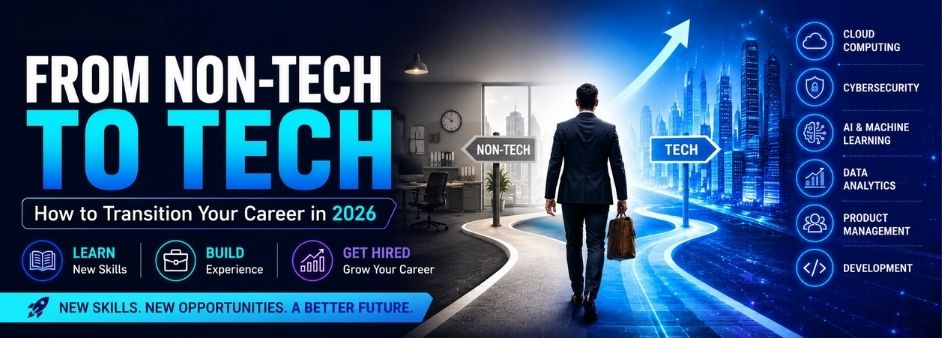
The technology industry continues to create opportunities across every sector, making it an attractive career destination for professionals from non-technical backgrounds. Whether you’re working in sales, marketing, finance, operations, customer service, education, or administration, transitioning into a tech role is more achievable than ever.
Non-Tech to Tech Career Transition is becoming a widely recognized and achievable pathway for professionals seeking growth, stability, and innovation-driven careers.
The growing demand for digital skills, combined with the rise of AI, cloud computing, cybersecurity, and data analytics, has created multiple pathways into the technology sector. In 2026, companies are increasingly focused on skills and practical capabilities rather than traditional career paths.
The question is no longer whether you can move into tech, it is how to do it successfully.
Why More Professionals Are Moving into Tech
Technology is no longer limited to software developers and IT teams. Every business today relies on digital tools, data, automation, and technology-driven decision-making.
This has increased demand for professionals who can bridge the gap between business and technology.
Some common reasons people transition into tech include:
- Better career growth opportunities
- Higher earning potential
- Flexible and remote work options
- Continuous learning and innovation
- Strong demand across industries
For many professionals, tech offers both stability and long-term career growth.
Step 1: Identify the Right Tech Career Path
One of the biggest mistakes career changers make is assuming that every tech role requires coding expertise.
In reality, there are numerous technology-related careers with varying technical requirements.
Popular career paths include:
- Data Analytics
- Cybersecurity
- Cloud Computing
- Artificial Intelligence
- UI/UX Design
- Product Management
- Business Analysis
- Digital Marketing Technology
- Technical Support
- Project Management
Before investing in training, take time to understand which role aligns with your interests, strengths, and career goals.
Step 2: Assess Your Transferable Skills
Many professionals underestimate how much value they already bring to technology roles.
Skills such as communication, problem-solving, leadership, stakeholder management, project coordination, and customer engagement are highly valued in the tech industry.
For example:
- Sales professionals often excel in customer success roles.
- Finance professionals can transition into data analytics.
- Operations professionals can move into project management.
- Marketing professionals can specialize in marketing technology.
Your existing experience can become a significant advantage during your transition.
Step 3: Build Relevant Technical Skills
Once you’ve selected a target role, focus on acquiring the skills required for that position.
Some of the most in-demand skills in 2026 include:
- Artificial Intelligence and Generative AI
- Data Analytics and Visualization
- Python Programming
- Cloud Technologies
- Cybersecurity Fundamentals
- Agile and Scrum Methodologies
- Business Intelligence Tools
- Digital Transformation Technologies
The goal is not to learn everything but to develop expertise in the areas most relevant to your chosen path.
Step 4: Gain Hands-On Experience
Learning theory alone is rarely enough to secure a role in technology.
Employers want evidence that you can apply your knowledge in real-world scenarios.
You can gain practical experience by:
- Building personal projects
- Completing simulations and labs
- Participating in hackathons
- Contributing to open-source projects
- Creating portfolio projects
- Taking part in internships or freelance assignments
Hands-on experience often matters more than certificates alone.
Step 5: Build a Professional Portfolio
A strong portfolio demonstrates your skills and commitment to learning.
Depending on your target role, your portfolio could include:
- Data dashboards
- AI projects
- Security assessments
- UI/UX case studies
- Process improvement initiatives
- Technical documentation
A portfolio provides tangible proof of your capabilities and can significantly strengthen your job applications.
Step 6: Strengthen Your Professional Network
Networking remains one of the most effective ways to discover opportunities.
Connect with:
- Industry professionals
- Technology communities
- Alumni networks
- LinkedIn groups
- Learning cohorts
- Mentors
Engaging with professionals already working in your desired field can provide valuable insights and career guidance.
Step 7: Embrace Continuous Learning
Technology evolves rapidly, making continuous learning essential for long-term success.
Successful tech professionals consistently update their skills and stay informed about industry trends.
Developing a learning mindset will help you remain competitive and adaptable throughout your career.
Common Challenges Career Changers Face
Transitioning into technology can be challenging, but these obstacles are manageable with the right approach.
Common challenges include:
- Fear of starting over
- Limited technical knowledge
- Lack of practical experience
- Imposter syndrome
- Uncertainty about career direction
Remember that every experienced technology professional was once a beginner.
Conclusion
A successful transition from non-tech to tech is not about abandoning your previous experience, it is about building on it.
By identifying the right career path, developing relevant skills, gaining practical experience, and continuously learning, professionals from virtually any background can establish successful careers in technology.
In 2026, opportunities in tech are more accessible than ever. The key is to take the first step and remain committed to the journey.
FAQs
Can I transition into tech without a technical degree?
Yes. Many technology roles prioritize skills, practical experience, and problem-solving abilities over formal degrees.
What are the easiest tech careers for non-tech professionals?
Business Analysis, Product Management, Data Analytics, Technical Support, Customer Success, and Digital Marketing Technology are common entry points.
How long does it take to transition into tech?
The timeline varies depending on your chosen role, learning commitment, and prior experience, but many professionals make the transition within 6–18 months.
Do I need coding skills for a tech career?
Not all technology roles require coding. Many positions focus on business, operations, customer engagement, design, and project management.
What is the most important factor for a successful transition?
A combination of relevant skills, hands-on experience, a strong portfolio, and continuous learning is often the key to success.
Introduction
The technology industry continues to create opportunities across every sector, making it an attractive career destination for professionals from non-technical backgrounds. Whether you’re working in sales, marketing, finance, operations, customer service, education, or administration, transitioning into a tech role is more achievable than ever.
Non-Tech to Tech Career Transition is becoming a widely recognized and achievable pathway for professionals seeking growth, stability, and innovation-driven careers.
The growing demand for digital skills, combined with the rise of AI, cloud computing, cybersecurity, and data analytics, has created multiple pathways into the technology sector. In 2026, companies are increasingly focused on skills and practical capabilities rather than traditional career paths.
The question is no longer whether you can move into tech, it is how to do it successfully.
Why More Professionals Are Moving into Tech
Technology is no longer limited to software developers and IT teams. Every business today relies on digital tools, data, automation, and technology-driven decision-making.
This has increased demand for professionals who can bridge the gap between business and technology.
Some common reasons people transition into tech include:
- Better career growth opportunities
- Higher earning potential
- Flexible and remote work options
- Continuous learning and innovation
- Strong demand across industries
For many professionals, tech offers both stability and long-term career growth.
Step 1: Identify the Right Tech Career Path
One of the biggest mistakes career changers make is assuming that every tech role requires coding expertise.
In reality, there are numerous technology-related careers with varying technical requirements.
Popular career paths include:
- Data Analytics
- Cybersecurity
- Cloud Computing
- Artificial Intelligence
- UI/UX Design
- Product Management
- Business Analysis
- Digital Marketing Technology
- Technical Support
- Project Management
Before investing in training, take time to understand which role aligns with your interests, strengths, and career goals.
Step 2: Assess Your Transferable Skills
Many professionals underestimate how much value they already bring to technology roles.
Skills such as communication, problem-solving, leadership, stakeholder management, project coordination, and customer engagement are highly valued in the tech industry.
For example:
- Sales professionals often excel in customer success roles.
- Finance professionals can transition into data analytics.
- Operations professionals can move into project management.
- Marketing professionals can specialize in marketing technology.
Your existing experience can become a significant advantage during your transition.
Step 3: Build Relevant Technical Skills
Once you’ve selected a target role, focus on acquiring the skills required for that position.
Some of the most in-demand skills in 2026 include:
- Artificial Intelligence and Generative AI
- Data Analytics and Visualization
- Python Programming
- Cloud Technologies
- Cybersecurity Fundamentals
- Agile and Scrum Methodologies
- Business Intelligence Tools
- Digital Transformation Technologies
The goal is not to learn everything but to develop expertise in the areas most relevant to your chosen path.
Step 4: Gain Hands-On Experience
Learning theory alone is rarely enough to secure a role in technology.
Employers want evidence that you can apply your knowledge in real-world scenarios.
You can gain practical experience by:
- Building personal projects
- Completing simulations and labs
- Participating in hackathons
- Contributing to open-source projects
- Creating portfolio projects
- Taking part in internships or freelance assignments
Hands-on experience often matters more than certificates alone.
Step 5: Build a Professional Portfolio
A strong portfolio demonstrates your skills and commitment to learning.
Depending on your target role, your portfolio could include:
- Data dashboards
- AI projects
- Security assessments
- UI/UX case studies
- Process improvement initiatives
- Technical documentation
A portfolio provides tangible proof of your capabilities and can significantly strengthen your job applications.
Step 6: Strengthen Your Professional Network
Networking remains one of the most effective ways to discover opportunities.
Connect with:
- Industry professionals
- Technology communities
- Alumni networks
- LinkedIn groups
- Learning cohorts
- Mentors
Engaging with professionals already working in your desired field can provide valuable insights and career guidance.
Step 7: Embrace Continuous Learning
Technology evolves rapidly, making continuous learning essential for long-term success.
Successful tech professionals consistently update their skills and stay informed about industry trends.
Developing a learning mindset will help you remain competitive and adaptable throughout your career.
Common Challenges Career Changers Face
Transitioning into technology can be challenging, but these obstacles are manageable with the right approach.
Common challenges include:
- Fear of starting over
- Limited technical knowledge
- Lack of practical experience
- Imposter syndrome
- Uncertainty about career direction
Remember that every experienced technology professional was once a beginner.
Conclusion
A successful transition from non-tech to tech is not about abandoning your previous experience, it is about building on it.
By identifying the right career path, developing relevant skills, gaining practical experience, and continuously learning, professionals from virtually any background can establish successful careers in technology.
In 2026, opportunities in tech are more accessible than ever. The key is to take the first step and remain committed to the journey.
FAQs
Can I transition into tech without a technical degree?
Yes. Many technology roles prioritize skills, practical experience, and problem-solving abilities over formal degrees.
What are the easiest tech careers for non-tech professionals?
Business Analysis, Product Management, Data Analytics, Technical Support, Customer Success, and Digital Marketing Technology are common entry points.
How long does it take to transition into tech?
The timeline varies depending on your chosen role, learning commitment, and prior experience, but many professionals make the transition within 6–18 months.
Do I need coding skills for a tech career?
Not all technology roles require coding. Many positions focus on business, operations, customer engagement, design, and project management.
What is the most important factor for a successful transition?
A combination of relevant skills, hands-on experience, a strong portfolio, and continuous learning is often the key to success.