AI Agents in Corporate Training: The Next Evolution of Workplace Learning
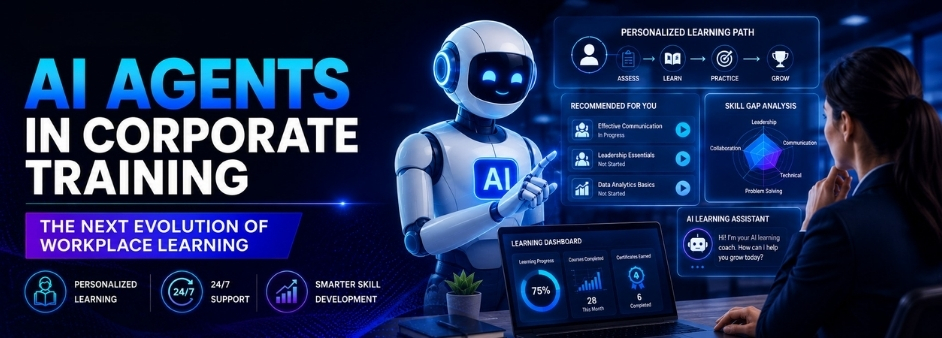
Introduction
Artificial Intelligence has already transformed many aspects of the workplace, from automation and analytics to customer service and content creation. Now, a new wave of innovation is emerging, AI Agents.
Unlike traditional AI tools that respond to specific prompts, AI agents can perform tasks autonomously, learn from interactions, and assist users proactively. In the world of corporate training, this evolution has the potential to fundamentally change how employees learn, develop skills, and access knowledge.
As organizations seek faster, smarter, and more personalized learning experiences, AI agents are becoming a powerful force in workplace learning.
What Are AI Agents?
AI agents are intelligent digital assistants capable of understanding goals, making decisions, and taking actions with minimal human intervention. They go beyond answering questions and can actively support employees throughout their learning journey.
Think of them as virtual learning coaches that can:
- Recommend training based on skill gaps
- Create personalized learning paths
- Answer employee questions instantly
- Track learning progress
- Suggest next-step development opportunities
Rather than simply delivering content, AI agents help guide the entire learning experience.
Why Corporate Training Needs AI Agents
Traditional training programs often struggle to meet the needs of a diverse workforce. Employees have different learning styles, skill levels, and career aspirations, making one-size-fits-all training increasingly ineffective.
AI agents address these challenges by delivering learning experiences tailored to individual needs.
Organizations are increasingly looking for ways to:
- Improve learner engagement
- Accelerate skill development
- Reduce training administration
- Deliver learning at scale
- Create continuous learning environments
AI agents help achieve these goals while making training more relevant and accessible.
How AI Agents Are Transforming Workplace Learning
1. Personalized Learning at Scale
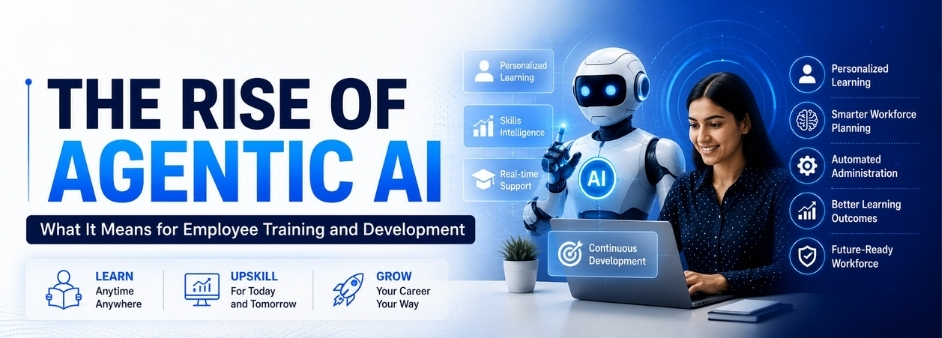
One of the biggest challenges in corporate training is personalization. AI agents analyze employee behavior, performance, and learning preferences to create customized learning experiences.
Instead of assigning the same courses to everyone, employees receive recommendations aligned with their role, goals, and skill requirements.
This results in higher engagement and better learning outcomes.
2. 24/7 Learning Support
Employees no longer need to wait for trainers or managers to answer questions.
AI agents can provide:
- Instant responses
- Learning recommendations
- Resource suggestions
- Training guidance
This ensures employees can learn whenever they need support, regardless of time zones or work schedules.
3. Intelligent Skills Gap Analysis
AI agents can continuously monitor employee capabilities and compare them against current and future business requirements.
This enables organizations to:
- Identify emerging skill gaps
- Prioritize training investments
- Develop targeted upskilling programs
- Support workforce planning initiatives
The result is a more agile and future-ready workforce.
4. Automated Learning Administration
Training teams spend considerable time managing enrollments, tracking completion rates, generating reports, and coordinating learning programs.
AI agents can automate many of these administrative tasks, allowing L&D professionals to focus on strategy and employee development rather than manual processes.
5. Continuous Learning Recommendations
Learning should not stop after a course is completed.
AI agents can continuously recommend:
- New courses
- Relevant articles
- Skill-building activities
- Certifications
- Learning communities
This encourages employees to develop a habit of continuous learning rather than viewing training as a one-time event.
Benefits of AI Agents in Corporate Training
Organizations adopting AI agents can expect several advantages:
- Increased learner engagement
- Faster skill acquisition
- Improved training efficiency
- Reduced administrative workload
- Better learning personalization
- Enhanced workforce readiness
Most importantly, AI agents help create learning experiences that are aligned with business goals and employee growth.
Challenges Organizations Should Consider
While AI agents offer significant opportunities, organizations must implement them thoughtfully.
Key considerations include:
- Data privacy and security
- Accuracy of recommendations
- Transparency in AI decision-making
- Human oversight and support
- Ethical use of employee data
The most effective learning strategies combine AI-driven intelligence with human expertise.
The Future of AI Agents in Learning & Development
As AI technology continues to evolve, AI agents will become even more capable. Future agents may act as career coaches, performance advisors, and learning companions that proactively guide employees toward new opportunities.
Organizations that adopt these technologies early will gain a competitive advantage by developing talent faster and adapting more effectively to changing business demands.
AI agents are not simply enhancing corporate training, they are redefining what workplace learning can become.
Conclusion
Corporate learning is entering a new era. AI agents are helping organizations move beyond traditional training models by delivering personalized, intelligent, and continuous learning experiences.
For businesses looking to build future-ready workforces, AI agents represent one of the most exciting developments in Learning & Development today.
The question is no longer whether AI will influence workplace learning, it is how quickly organizations can embrace it.
FAQs
What are AI agents in corporate training?
AI agents are intelligent digital assistants that help employees learn, access information, receive personalized recommendations, and develop skills more effectively.
How are AI agents different from traditional AI tools?
Traditional AI tools typically respond to prompts, while AI agents can act autonomously, make decisions, and proactively support learning objectives.
Can AI agents replace trainers?
No. AI agents enhance learning experiences and automate routine tasks, but human trainers remain essential for coaching, mentorship, and strategic guidance.
What are the benefits of AI agents for organizations?
Benefits include personalized learning, faster skill development, improved engagement, reduced administrative effort, and better workforce readiness.
Why are AI agents considered the future of workplace learning?
Because they deliver scalable, personalized, and continuous learning experiences that adapt to employee needs and business objectives.
Introduction
Artificial Intelligence has already transformed many aspects of the workplace, from automation and analytics to customer service and content creation. Now, a new wave of innovation is emerging, AI Agents.
Unlike traditional AI tools that respond to specific prompts, AI agents can perform tasks autonomously, learn from interactions, and assist users proactively. In the world of corporate training, this evolution has the potential to fundamentally change how employees learn, develop skills, and access knowledge.
As organizations seek faster, smarter, and more personalized learning experiences, AI agents are becoming a powerful force in workplace learning.
What Are AI Agents?
AI agents are intelligent digital assistants capable of understanding goals, making decisions, and taking actions with minimal human intervention. They go beyond answering questions and can actively support employees throughout their learning journey.
Think of them as virtual learning coaches that can:
- Recommend training based on skill gaps
- Create personalized learning paths
- Answer employee questions instantly
- Track learning progress
- Suggest next-step development opportunities
Rather than simply delivering content, AI agents help guide the entire learning experience.
Why Corporate Training Needs AI Agents
Traditional training programs often struggle to meet the needs of a diverse workforce. Employees have different learning styles, skill levels, and career aspirations, making one-size-fits-all training increasingly ineffective.
AI agents address these challenges by delivering learning experiences tailored to individual needs.
Organizations are increasingly looking for ways to:
- Improve learner engagement
- Accelerate skill development
- Reduce training administration
- Deliver learning at scale
- Create continuous learning environments
AI agents help achieve these goals while making training more relevant and accessible.
How AI Agents Are Transforming Workplace Learning
1. Personalized Learning at Scale
One of the biggest challenges in corporate training is personalization. AI agents analyze employee behavior, performance, and learning preferences to create customized learning experiences.
Instead of assigning the same courses to everyone, employees receive recommendations aligned with their role, goals, and skill requirements.
This results in higher engagement and better learning outcomes.
2. 24/7 Learning Support
Employees no longer need to wait for trainers or managers to answer questions.
AI agents can provide:
- Instant responses
- Learning recommendations
- Resource suggestions
- Training guidance
This ensures employees can learn whenever they need support, regardless of time zones or work schedules.
3. Intelligent Skills Gap Analysis
AI agents can continuously monitor employee capabilities and compare them against current and future business requirements.
This enables organizations to:
- Identify emerging skill gaps
- Prioritize training investments
- Develop targeted upskilling programs
- Support workforce planning initiatives
The result is a more agile and future-ready workforce.
4. Automated Learning Administration
Training teams spend considerable time managing enrollments, tracking completion rates, generating reports, and coordinating learning programs.
AI agents can automate many of these administrative tasks, allowing L&D professionals to focus on strategy and employee development rather than manual processes.
5. Continuous Learning Recommendations
Learning should not stop after a course is completed.
AI agents can continuously recommend:
- New courses
- Relevant articles
- Skill-building activities
- Certifications
- Learning communities
This encourages employees to develop a habit of continuous learning rather than viewing training as a one-time event.
Benefits of AI Agents in Corporate Training
Organizations adopting AI agents can expect several advantages:
- Increased learner engagement
- Faster skill acquisition
- Improved training efficiency
- Reduced administrative workload
- Better learning personalization
- Enhanced workforce readiness
Most importantly, AI agents help create learning experiences that are aligned with business goals and employee growth.
Challenges Organizations Should Consider
While AI agents offer significant opportunities, organizations must implement them thoughtfully.
Key considerations include:
- Data privacy and security
- Accuracy of recommendations
- Transparency in AI decision-making
- Human oversight and support
- Ethical use of employee data
The most effective learning strategies combine AI-driven intelligence with human expertise.
The Future of AI Agents in Learning & Development
As AI technology continues to evolve, AI agents will become even more capable. Future agents may act as career coaches, performance advisors, and learning companions that proactively guide employees toward new opportunities.
Organizations that adopt these technologies early will gain a competitive advantage by developing talent faster and adapting more effectively to changing business demands.
AI agents are not simply enhancing corporate training, they are redefining what workplace learning can become.
Conclusion
Corporate learning is entering a new era. AI agents are helping organizations move beyond traditional training models by delivering personalized, intelligent, and continuous learning experiences.
For businesses looking to build future-ready workforces, AI agents represent one of the most exciting developments in Learning & Development today.
The question is no longer whether AI will influence workplace learning, it is how quickly organizations can embrace it.
FAQs
What are AI agents in corporate training?
AI agents are intelligent digital assistants that help employees learn, access information, receive personalized recommendations, and develop skills more effectively.
How are AI agents different from traditional AI tools?
Traditional AI tools typically respond to prompts, while AI agents can act autonomously, make decisions, and proactively support learning objectives.
Can AI agents replace trainers?
No. AI agents enhance learning experiences and automate routine tasks, but human trainers remain essential for coaching, mentorship, and strategic guidance.
What are the benefits of AI agents for organizations?
Benefits include personalized learning, faster skill development, improved engagement, reduced administrative effort, and better workforce readiness.
Why are AI agents considered the future of workplace learning?
Because they deliver scalable, personalized, and continuous learning experiences that adapt to employee needs and business objectives.