AI Literacy in the Workplace: Why Every Employee Needs It in 2026
Introduction
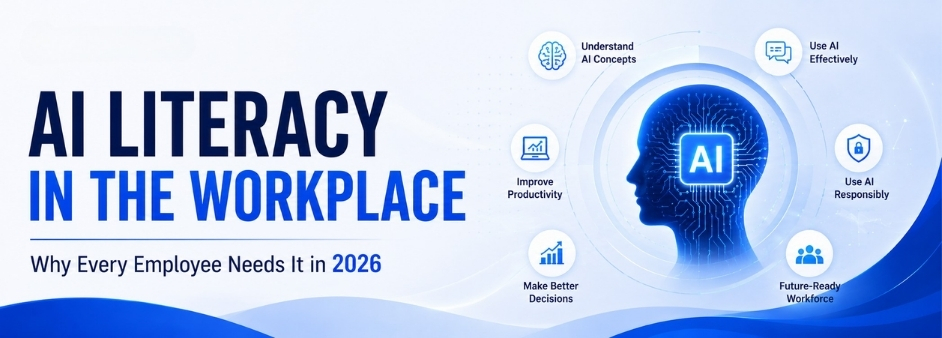
Artificial Intelligence is no longer limited to IT teams or data scientists. From HR and finance to marketing, customer service, and operations, AI is becoming an integral part of everyday work. As organizations accelerate their digital transformation, one skill is emerging as essential for every employee, AI Literacy in the Workplace, or AI literacy.
AI Literacy in the Workplace is about more than knowing how to use AI tools. It involves understanding how AI works, recognizing its capabilities and limitations, using it responsibly, and collaborating effectively with AI-powered technologies.
In 2026, organizations that invest in AI literacy will be better positioned to drive innovation, improve productivity, and build a future-ready workforce.
What Is AI Literacy?
AI literacy refers to the knowledge and skills employees need to confidently understand, use, and evaluate artificial intelligence in their daily work.
It includes the ability to:
- Understand basic AI concepts
- Use AI tools effectively
- Write effective prompts
- Interpret AI-generated outputs
- Identify biases and limitations
- Apply AI responsibly and ethically
- Protect sensitive business data while using AI
AI literacy empowers employees to work smarter with AI rather than fear being replaced by it.
Why AI Literacy Matters in 2026
AI is reshaping nearly every business function. Employees who understand how to leverage AI can automate repetitive tasks, make better decisions, and focus on higher-value work.
Organizations are increasingly looking for teams that can:
- Work alongside AI assistants
- Improve productivity through automation
- Make data-driven decisions
- Adapt quickly to emerging technologies
- Use AI responsibly and securely
As AI adoption grows, AI literacy is becoming a core workplace competency rather than a specialized technical skill.
The Benefits of AI Literacy in the Workplace
1. Improved Productivity
Employees can use AI to automate repetitive tasks, summarize information, generate ideas, and accelerate routine workflows, allowing them to focus on strategic work.
2. Better Decision-Making
AI-powered insights help employees analyze data faster, identify trends, and make more informed business decisions.
3. Responsible AI Adoption
AI literacy helps employees understand ethical considerations, data privacy requirements, and the importance of validating AI-generated content.
4. Greater Innovation
When employees understand AI capabilities, they are more likely to experiment with new ideas, improve processes, and identify opportunities for innovation.
5. Increased Workforce Agility
Organizations with AI-literate employees can adapt more quickly to technological change and remain competitive in an evolving business landscape.
Key AI Skills Every Employee Should Learn
Modern AI literacy programs should include:
- AI fundamentals
- Prompt engineering basics
- Responsible AI practices
- Data privacy and security
- AI-assisted productivity
- Critical thinking and fact-checking
- AI collaboration techniques
These skills prepare employees to work confidently with AI across various roles and departments.
How Organizations Can Build AI Literacy
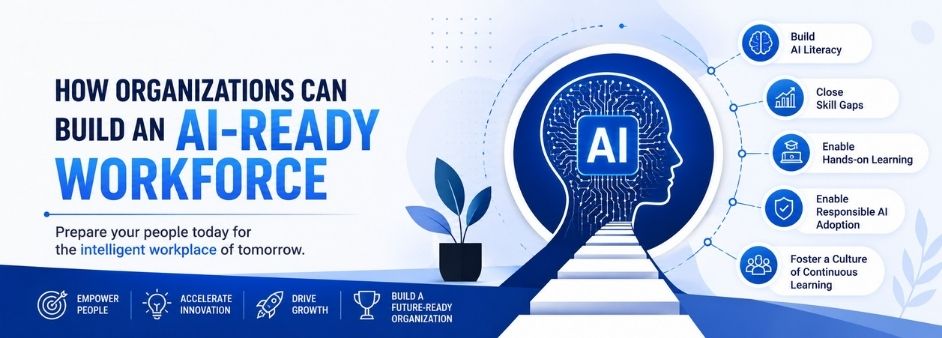
Building AI literacy requires more than a one-time workshop. Successful organizations create continuous learning opportunities that encourage employees to develop practical AI skills.
Best practices include:
- Role-based AI learning paths
- Hands-on AI workshops
- Real-world business use cases
- AI policy and governance training
- Microlearning modules
- Ongoing assessments and certifications
Embedding AI literacy into existing Learning & Development programs helps create a culture of continuous learning.
Common Challenges
While AI literacy offers significant benefits, organizations may face challenges such as:
- Resistance to change
- Concerns about job displacement
- Limited AI awareness
- Inconsistent AI usage
- Data privacy risks
Clear communication, structured training, and responsible AI governance can help overcome these barriers.
The Future of AI Literacy
As AI becomes embedded in everyday business operations, AI literacy will become as fundamental as digital literacy.
Organizations will increasingly expect employees to understand how to collaborate with AI, evaluate AI-generated insights, and apply AI responsibly in their roles.
Companies that prioritize AI literacy today will be better prepared to navigate tomorrow’s workplace.
Conclusion
AI is transforming the way people work, but technology alone does not create competitive advantage, people do.
By investing in AI Literacy in the Workplace, organizations empower employees to embrace AI confidently, improve productivity, and contribute to innovation.
In 2026 and beyond, AI literacy will not be optional. It will be a critical skill for every employee and a key driver of organizational success.
FAQs
What is AI literacy in the workplace?
AI literacy is the ability to understand, use, evaluate, and apply AI tools responsibly and effectively in everyday work.
Why is AI literacy important for employees?
It helps employees improve productivity, make informed decisions, collaborate with AI tools, and adapt to evolving workplace technologies.
Does every employee need AI literacy?
Yes. AI is being adopted across HR, finance, marketing, operations, customer service, and many other business functions, making AI literacy valuable for every role.
How can organizations improve AI literacy?
Organizations can offer role-based training, hands-on workshops, AI governance education, microlearning, and continuous learning programs.
What is the difference between AI literacy and AI expertise?
AI literacy focuses on understanding and effectively using AI tools, while AI expertise involves designing, developing, or managing AI systems.
Introduction
Artificial Intelligence is no longer limited to IT teams or data scientists. From HR and finance to marketing, customer service, and operations, AI is becoming an integral part of everyday work. As organizations accelerate their digital transformation, one skill is emerging as essential for every employee, AI Literacy in the Workplace, or AI literacy.
AI Literacy in the Workplace is about more than knowing how to use AI tools. It involves understanding how AI works, recognizing its capabilities and limitations, using it responsibly, and collaborating effectively with AI-powered technologies.
In 2026, organizations that invest in AI literacy will be better positioned to drive innovation, improve productivity, and build a future-ready workforce.
What Is AI Literacy?
AI literacy refers to the knowledge and skills employees need to confidently understand, use, and evaluate artificial intelligence in their daily work.
It includes the ability to:
- Understand basic AI concepts
- Use AI tools effectively
- Write effective prompts
- Interpret AI-generated outputs
- Identify biases and limitations
- Apply AI responsibly and ethically
- Protect sensitive business data while using AI
AI literacy empowers employees to work smarter with AI rather than fear being replaced by it.
Why AI Literacy Matters in 2026
AI is reshaping nearly every business function. Employees who understand how to leverage AI can automate repetitive tasks, make better decisions, and focus on higher-value work.
Organizations are increasingly looking for teams that can:
- Work alongside AI assistants
- Improve productivity through automation
- Make data-driven decisions
- Adapt quickly to emerging technologies
- Use AI responsibly and securely
As AI adoption grows, AI literacy is becoming a core workplace competency rather than a specialized technical skill.
The Benefits of AI Literacy in the Workplace
1. Improved Productivity
Employees can use AI to automate repetitive tasks, summarize information, generate ideas, and accelerate routine workflows, allowing them to focus on strategic work.
2. Better Decision-Making
AI-powered insights help employees analyze data faster, identify trends, and make more informed business decisions.
3. Responsible AI Adoption
AI literacy helps employees understand ethical considerations, data privacy requirements, and the importance of validating AI-generated content.
4. Greater Innovation
When employees understand AI capabilities, they are more likely to experiment with new ideas, improve processes, and identify opportunities for innovation.
5. Increased Workforce Agility
Organizations with AI-literate employees can adapt more quickly to technological change and remain competitive in an evolving business landscape.
Key AI Skills Every Employee Should Learn
Modern AI literacy programs should include:
- AI fundamentals
- Prompt engineering basics
- Responsible AI practices
- Data privacy and security
- AI-assisted productivity
- Critical thinking and fact-checking
- AI collaboration techniques
These skills prepare employees to work confidently with AI across various roles and departments.
How Organizations Can Build AI Literacy
Building AI literacy requires more than a one-time workshop. Successful organizations create continuous learning opportunities that encourage employees to develop practical AI skills.
Best practices include:
- Role-based AI learning paths
- Hands-on AI workshops
- Real-world business use cases
- AI policy and governance training
- Microlearning modules
- Ongoing assessments and certifications
Embedding AI literacy into existing Learning & Development programs helps create a culture of continuous learning.
Common Challenges
While AI literacy offers significant benefits, organizations may face challenges such as:
- Resistance to change
- Concerns about job displacement
- Limited AI awareness
- Inconsistent AI usage
- Data privacy risks
Clear communication, structured training, and responsible AI governance can help overcome these barriers.
The Future of AI Literacy
As AI becomes embedded in everyday business operations, AI literacy will become as fundamental as digital literacy.
Organizations will increasingly expect employees to understand how to collaborate with AI, evaluate AI-generated insights, and apply AI responsibly in their roles.
Companies that prioritize AI literacy today will be better prepared to navigate tomorrow’s workplace.
Conclusion
AI is transforming the way people work, but technology alone does not create competitive advantage, people do.
By investing in AI Literacy in the Workplace, organizations empower employees to embrace AI confidently, improve productivity, and contribute to innovation.
In 2026 and beyond, AI literacy will not be optional. It will be a critical skill for every employee and a key driver of organizational success.
FAQs
What is AI literacy in the workplace?
AI literacy is the ability to understand, use, evaluate, and apply AI tools responsibly and effectively in everyday work.
Why is AI literacy important for employees?
It helps employees improve productivity, make informed decisions, collaborate with AI tools, and adapt to evolving workplace technologies.
Does every employee need AI literacy?
Yes. AI is being adopted across HR, finance, marketing, operations, customer service, and many other business functions, making AI literacy valuable for every role.
How can organizations improve AI literacy?
Organizations can offer role-based training, hands-on workshops, AI governance education, microlearning, and continuous learning programs.
What is the difference between AI literacy and AI expertise?
AI literacy focuses on understanding and effectively using AI tools, while AI expertise involves designing, developing, or managing AI systems.