How Organizations Can Build an AI-Ready Workforce
Introduction
Artificial Intelligence is reshaping how businesses operate, innovate, and compete. From automating repetitive tasks to enhancing decision-making, AI is becoming a core capability across every industry. However, successful AI adoption isn’t just about investing in technology, it’s about preparing people to work effectively with it.
Building an AI-ready workforce means equipping employees with the knowledge, skills, and mindset to confidently adopt AI in their daily work. Organizations that invest in AI readiness are better positioned to drive innovation, improve productivity, and remain competitive in an increasingly digital economy.
What Is an AI-Ready Workforce?
An AI-ready workforce consists of employees who understand AI fundamentals, know how to use AI tools responsibly, and can collaborate effectively with AI-powered systems.
Being AI-ready doesn’t mean everyone needs to become a data scientist. Instead, employees should be able to:
- Understand AI capabilities and limitations
- Use AI tools to improve productivity
- Apply critical thinking to AI-generated outputs
- Protect sensitive data while using AI
- Follow responsible AI practices
- Continuously adapt to new technologies
Why AI Readiness Matters
Organizations are adopting AI faster than ever, but many employees still lack the skills to use it effectively. Without proper training, businesses risk low adoption, security concerns, and missed opportunities.
An AI-ready workforce enables organizations to:
- Increase operational efficiency
- Accelerate innovation
- Improve employee productivity
- Strengthen business resilience
- Support digital transformation initiatives
- Enhance customer experiences
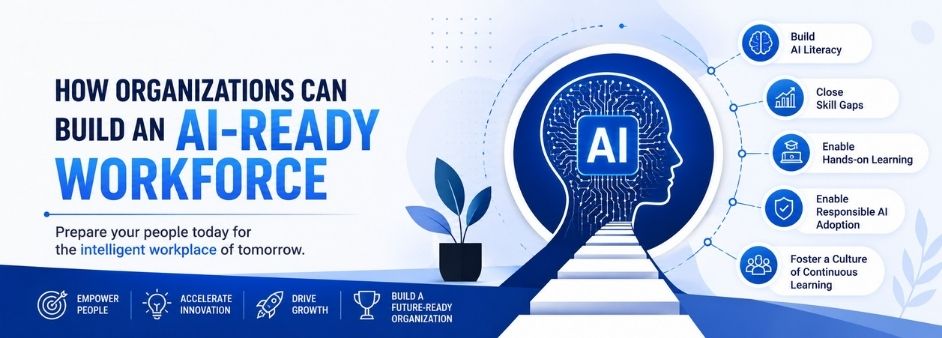
Key Steps to Build an AI-Ready Workforce
1. Start with AI Literacy
Every employee should have a foundational understanding of AI. Training should cover:
- AI basics
- Generative AI
- Prompt writing
- AI ethics
- Data privacy
- Responsible AI usage
Creating a common knowledge base helps employees adopt AI with confidence.
2. Identify Skill Gaps
Assess current workforce capabilities to understand where AI-related skills are missing.
Organizations can evaluate:
- Technical skills
- Digital literacy
- Role-specific AI competencies
- Business process knowledge
This helps prioritize learning investments.
3. Create Role-Based Learning Paths
Different roles require different AI skills.
Examples include:
- HR: AI-assisted recruitment and workforce analytics
- Marketing: AI content creation and campaign optimization
- Finance: AI-powered forecasting and reporting
- Sales: AI-driven customer insights
- Operations: Process automation and predictive analytics
Tailoring learning paths increases relevance and engagement.
4. Encourage Hands-On Learning
Employees learn best by applying AI in real-world scenarios.
Organizations should provide:
- Practical workshops
- AI simulations
- Sandbox environments
- Team challenges
- Business use cases
Hands-on experience builds confidence and accelerates adoption.
5. Establish Responsible AI Governance
Successful AI adoption requires clear policies and guidelines.
Organizations should define:
- Acceptable AI usage
- Data security standards
- Privacy requirements
- Human oversight
- Compliance expectations
Responsible governance builds trust across the organization.
6. Foster a Culture of Continuous Learning
AI is evolving rapidly, making continuous learning essential.
Encourage employees to:
- Explore new AI tools
- Share best practices
- Participate in AI communities
- Earn certifications
- Stay updated on emerging trends
Learning should become part of everyday work rather than a one-time event.
Benefits of an AI-Ready Workforce
Organizations that prioritize AI readiness can achieve:
- Faster AI adoption
- Higher employee confidence
- Increased innovation
- Better decision-making
- Improved productivity
- Stronger competitive advantage
- Future-ready talent
These benefits extend beyond technology and contribute directly to business growth.
Common Challenges
Organizations may encounter:
- Resistance to change
- Limited AI awareness
- Skill shortages
- Data privacy concerns
- Unclear AI governance
Addressing these challenges requires leadership support, structured training, and open communication.
The Future of AI-Ready Organizations
As AI continues to evolve, organizations will increasingly value employees who can collaborate with intelligent systems, adapt to change, and apply AI responsibly.
Future-ready businesses will integrate AI learning into onboarding, leadership development, and continuous professional growth, ensuring employees remain prepared for new technologies and evolving job roles.
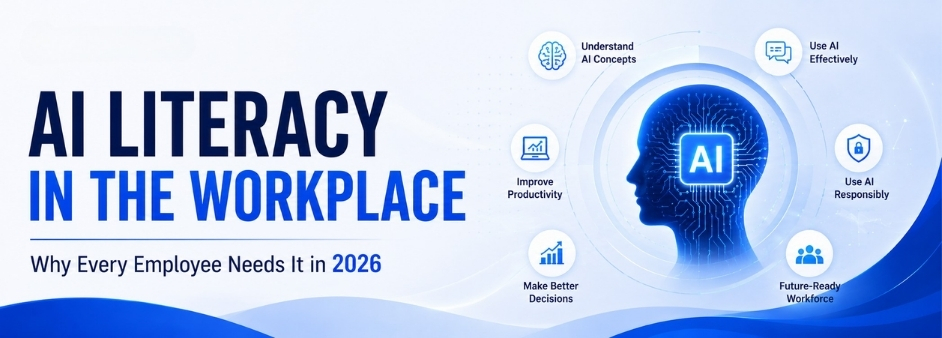
The Future of AI Literacy
As AI becomes embedded in everyday business operations, AI literacy will become as fundamental as digital literacy.
Organizations will increasingly expect employees to understand how to collaborate with AI, evaluate AI-generated insights, and apply AI responsibly in their roles.
Companies that prioritize AI literacy today will be better prepared to navigate tomorrow’s workplace.
Conclusion
Building an AI-ready workforce is no longer a future initiative, it’s a business imperative.
Organizations that invest in AI literacy, role-based learning, hands-on experience, and responsible AI governance will be better equipped to unlock the full potential of artificial intelligence.
The future of work belongs to organizations that prepare their people, not just their technology.
FAQs
What is an AI-ready workforce?
An AI-ready workforce consists of employees who have the skills, knowledge, and confidence to use AI responsibly and effectively in their roles.
Why is building an AI-ready workforce important?
It helps organizations improve productivity, accelerate AI adoption, drive innovation, and stay competitive in a rapidly evolving business environment.
Does every employee need AI skills?
Yes. While technical expertise varies by role, every employee should have a foundational understanding of AI, responsible usage, and AI-assisted productivity.
How can organizations prepare employees for AI?
Organizations can invest in AI literacy programs, role-based training, hands-on workshops, AI governance, and continuous learning initiatives.
What are the biggest challenges in creating an AI-ready workforce?
Common challenges include skill gaps, resistance to change, limited AI awareness, data privacy concerns, and the need for clear AI governance.
Introduction
Artificial Intelligence is reshaping how businesses operate, innovate, and compete. From automating repetitive tasks to enhancing decision-making, AI is becoming a core capability across every industry. However, successful AI adoption isn’t just about investing in technology, it’s about preparing people to work effectively with it.
Building an AI-ready workforce means equipping employees with the knowledge, skills, and mindset to confidently adopt AI in their daily work. Organizations that invest in AI readiness are better positioned to drive innovation, improve productivity, and remain competitive in an increasingly digital economy.
What Is an AI-Ready Workforce?
An AI-ready workforce consists of employees who understand AI fundamentals, know how to use AI tools responsibly, and can collaborate effectively with AI-powered systems.
Being AI-ready doesn’t mean everyone needs to become a data scientist. Instead, employees should be able to:
- Understand AI capabilities and limitations
- Use AI tools to improve productivity
- Apply critical thinking to AI-generated outputs
- Protect sensitive data while using AI
- Follow responsible AI practices
- Continuously adapt to new technologies
Why AI Readiness Matters
Organizations are adopting AI faster than ever, but many employees still lack the skills to use it effectively. Without proper training, businesses risk low adoption, security concerns, and missed opportunities.
An AI-ready workforce enables organizations to:
- Increase operational efficiency
- Accelerate innovation
- Improve employee productivity
- Strengthen business resilience
- Support digital transformation initiatives
- Enhance customer experiences
Key Steps to Build an AI-Ready Workforce
1. Start with AI Literacy
Every employee should have a foundational understanding of AI. Training should cover:
- AI basics
- Generative AI
- Prompt writing
- AI ethics
- Data privacy
- Responsible AI usage
Creating a common knowledge base helps employees adopt AI with confidence.
2. Identify Skill Gaps
Assess current workforce capabilities to understand where AI-related skills are missing.
Organizations can evaluate:
- Technical skills
- Digital literacy
- Role-specific AI competencies
- Business process knowledge
This helps prioritize learning investments.
3. Create Role-Based Learning Paths
Different roles require different AI skills.
Examples include:
- HR: AI-assisted recruitment and workforce analytics
- Marketing: AI content creation and campaign optimization
- Finance: AI-powered forecasting and reporting
- Sales: AI-driven customer insights
- Operations: Process automation and predictive analytics
Tailoring learning paths increases relevance and engagement.
4. Encourage Hands-On Learning
Employees learn best by applying AI in real-world scenarios.
Organizations should provide:
- Practical workshops
- AI simulations
- Sandbox environments
- Team challenges
- Business use cases
Hands-on experience builds confidence and accelerates adoption.
5. Establish Responsible AI Governance
Successful AI adoption requires clear policies and guidelines.
Organizations should define:
- Acceptable AI usage
- Data security standards
- Privacy requirements
- Human oversight
- Compliance expectations
Responsible governance builds trust across the organization.
6. Foster a Culture of Continuous Learning
AI is evolving rapidly, making continuous learning essential.
Encourage employees to:
- Explore new AI tools
- Share best practices
- Participate in AI communities
- Earn certifications
- Stay updated on emerging trends
Learning should become part of everyday work rather than a one-time event.
Benefits of an AI-Ready Workforce
Organizations that prioritize AI readiness can achieve:
- Faster AI adoption
- Higher employee confidence
- Increased innovation
- Better decision-making
- Improved productivity
- Stronger competitive advantage
- Future-ready talent
These benefits extend beyond technology and contribute directly to business growth.
Common Challenges
Organizations may encounter:
- Resistance to change
- Limited AI awareness
- Skill shortages
- Data privacy concerns
- Unclear AI governance
Addressing these challenges requires leadership support, structured training, and open communication.
The Future of AI-Ready Organizations
As AI continues to evolve, organizations will increasingly value employees who can collaborate with intelligent systems, adapt to change, and apply AI responsibly.
Future-ready businesses will integrate AI learning into onboarding, leadership development, and continuous professional growth, ensuring employees remain prepared for new technologies and evolving job roles.
The Future of AI Literacy
As AI becomes embedded in everyday business operations, AI literacy will become as fundamental as digital literacy.
Organizations will increasingly expect employees to understand how to collaborate with AI, evaluate AI-generated insights, and apply AI responsibly in their roles.
Companies that prioritize AI literacy today will be better prepared to navigate tomorrow’s workplace.
Conclusion
Building an AI-ready workforce is no longer a future initiative, it’s a business imperative.
Organizations that invest in AI literacy, role-based learning, hands-on experience, and responsible AI governance will be better equipped to unlock the full potential of artificial intelligence.
The future of work belongs to organizations that prepare their people, not just their technology.
FAQs
What is an AI-ready workforce?
An AI-ready workforce consists of employees who have the skills, knowledge, and confidence to use AI responsibly and effectively in their roles.
Why is building an AI-ready workforce important?
It helps organizations improve productivity, accelerate AI adoption, drive innovation, and stay competitive in a rapidly evolving business environment.
Does every employee need AI skills?
Yes. While technical expertise varies by role, every employee should have a foundational understanding of AI, responsible usage, and AI-assisted productivity.
How can organizations prepare employees for AI?
Organizations can invest in AI literacy programs, role-based training, hands-on workshops, AI governance, and continuous learning initiatives.
What are the biggest challenges in creating an AI-ready workforce?
Common challenges include skill gaps, resistance to change, limited AI awareness, data privacy concerns, and the need for clear AI governance.